
Nathan King is the goldsmith behind Rings by NK, an independent jewelry studio in Makati, Metro Manila. Granulation is a signature technique in his handmade 18k gold work.
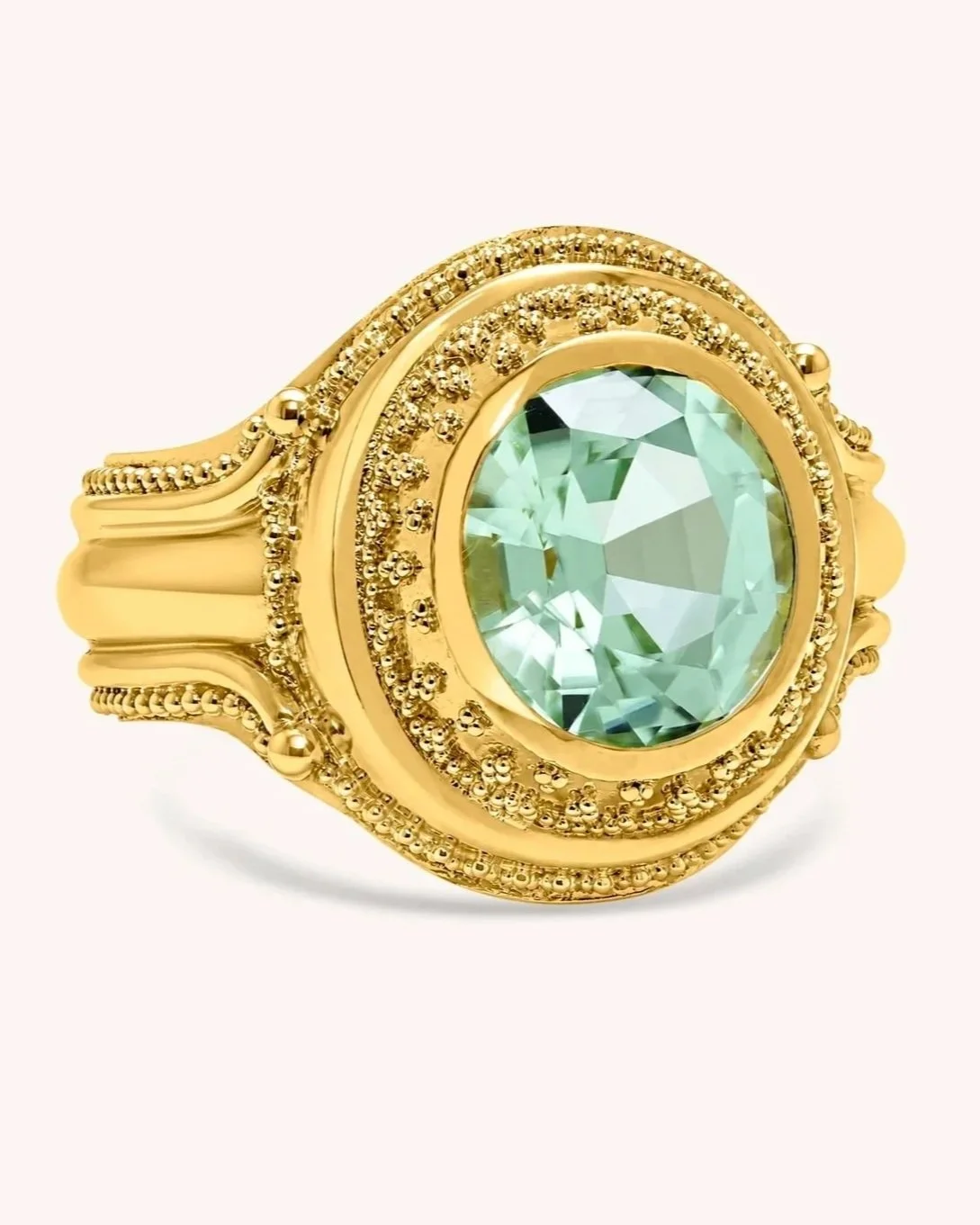
What is Gold Granulation?
Gold granulation is an ancient goldsmithing technique in which tiny individual spheres of gold are arranged on a surface and fused into place. Unlike a texture pressed, engraved or cast into the metal, the granules are separate pieces of gold that become part of the finished object.
The technique is thousands of years old. It became particularly sophisticated in ancient Etruscan jewelry, where goldsmiths created extraordinarily fine patterns from granules that could be almost microscopic. Granulation also appears in ancient Egyptian and Mediterranean jewelry, and in goldwork from other cultures across Asia. The Metropolitan Museum, for example, holds Egyptian gold objects using granulation dating to roughly the first millennium BCE.
The Philippines has its own deep history of sophisticated gold-working. Archaeological finds show that gold was being worked here long before Spanish colonization, including elaborate personal and funerary ornaments. The Met describes an ancient Philippine gold-working tradition and objects surviving from the 14th and 15th centuries and earlier.
I work in Manila today using a technique whose history stretches back thousands of years, within a country that itself has an extraordinary tradition of gold craftsmanship.
My own work isn't an attempt to reproduce ancient jewelry. I use granulation as part of a contemporary design language — sometimes as a restrained line of detail, sometimes to define the architecture of a ring, and sometimes across much of the surface.
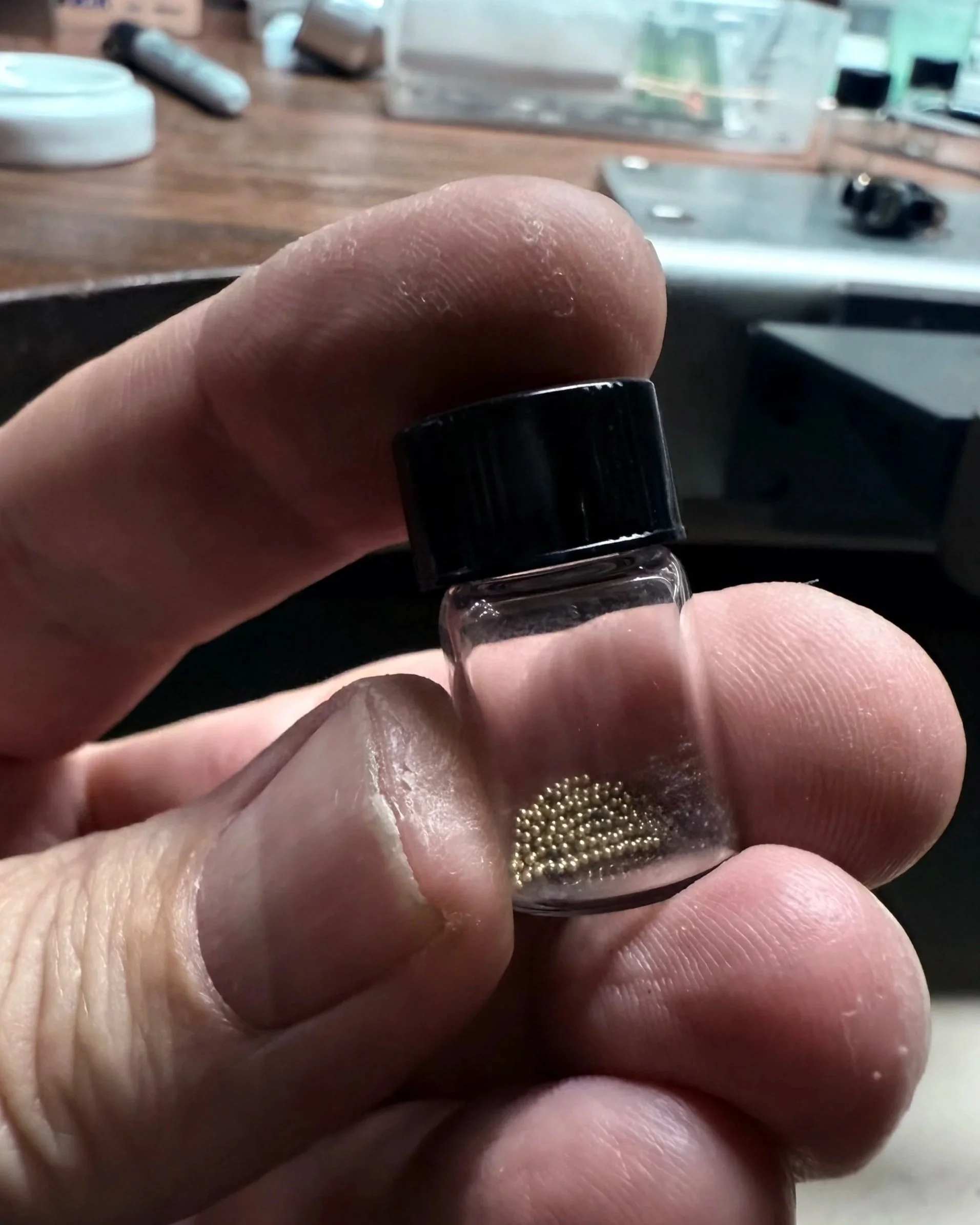
How are granules formed?
The granules begin as gold wire. I draw the wire down to a specific diameter, then cut it into equal lengths so the resulting granules are consistent in size.
The small pieces of wire are then heated until the gold pulls itself into a sphere through surface tension. Getting the wire diameter and cut length right is important, because both determine the final size of the granule.
For many of my rings, the granules are deliberately very small. That allows them to be used as fine borders, structural details, or repeated surface patterns without overwhelming the form of the ring.
How is granulation fused?
Once the granules have been formed, they are individually positioned on the ring and the piece is heated until the surface of the gold begins to fuse.
The difficult part is the margin between enough heat and too much. The ring has to be taken close enough to the melting point for the granules and the surface beneath them to bond, without allowing the granules to collapse or the ring itself to lose its form.
That narrow working range is one of the reasons granulation is such an unforgiving technique. Too little heat and the granules will not fuse properly. Too much, and the detail can disappear in seconds.
Granulation versus milgrain
Granulation and milgrain can look superficially similar because both can create rows of small rounded details, but they are fundamentally different techniques.
Milgrain is generally created by working the surface or edge of the metal to produce a repeated beaded texture. The detail is formed from the metal that is already there.
Granulation is different. The granules are separate pieces of gold. Each one is individually formed, positioned, and fused onto the surface of the ring.
That distinction matters to me because the granulation is not simply a decorative pattern pressed into the surface. It is built into the ring one piece at a time.
Why I use 18k gold
I use 18k yellow gold for my more heavily granulated pieces because it behaves consistently with the fusing process I use.
Granulation requires the surface of the ring and the granules to reach a very narrow working range. In my own testing, lower-carat alloys have not behaved in the same way. The granules can deform or flatten before I achieve the result I want.
For that reason, when granulation is a major part of a Rings by NK design, I generally work in 18k yellow gold.
The higher gold content also suits the character of the work. Granulation is an ancient technique, and I like using it in a material that retains the richness and weight people associate with high-carat gold.
Granulation in my work
I do not begin a design by asking where I can add granulation. The granulation has to belong to the structure of the ring.
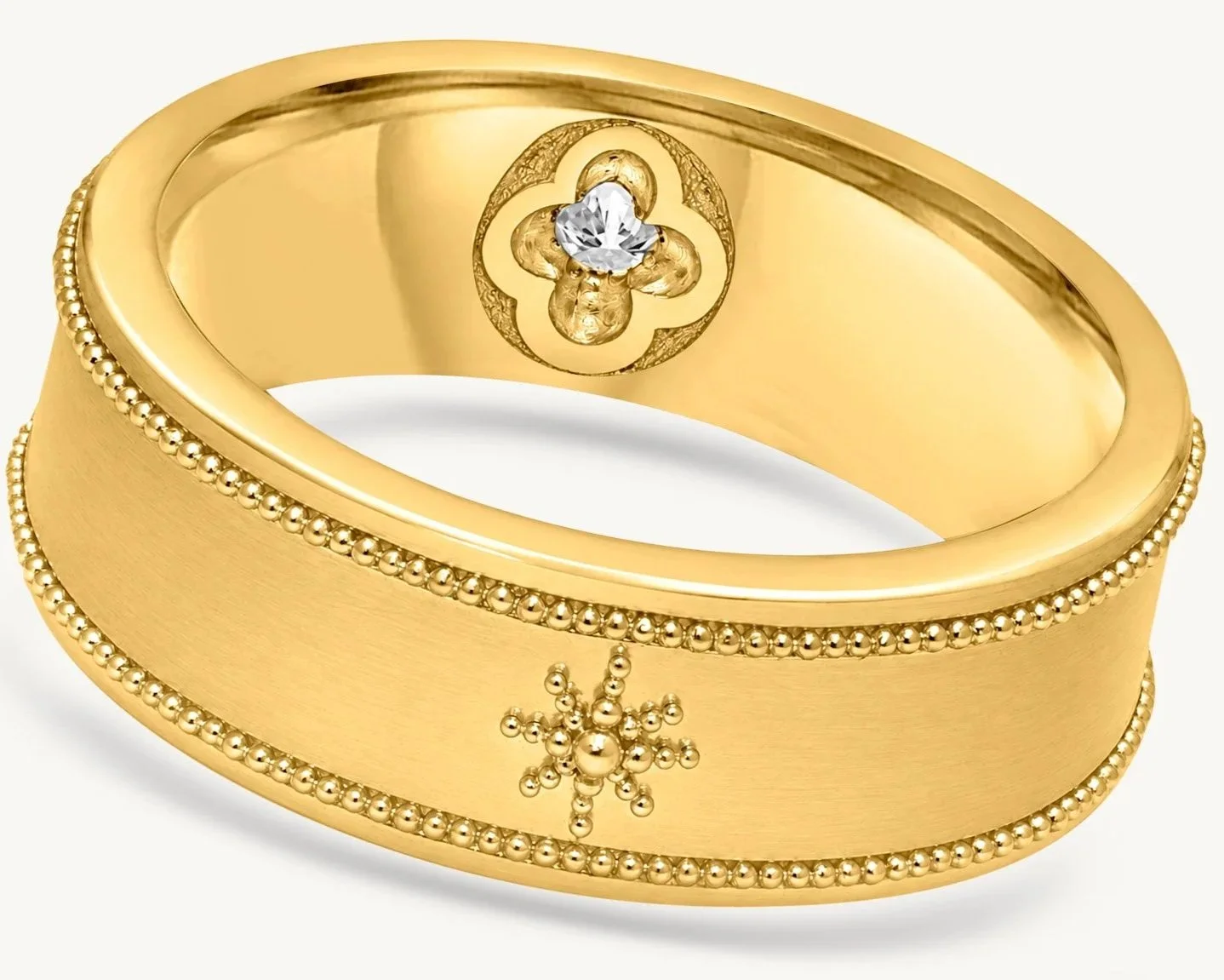
In some pieces, it is restrained: a single line of granules running along an edge or marking the transition between two surfaces.
In others, it becomes part of the architecture of the ring, defining borders, framing stones, or creating rhythm across the surface.
And in some of my more elaborate pieces, granulation becomes one of the dominant visual elements of the design.
What interests me is taking a technique that has existed for thousands of years and using it in rings that still feel contemporary.
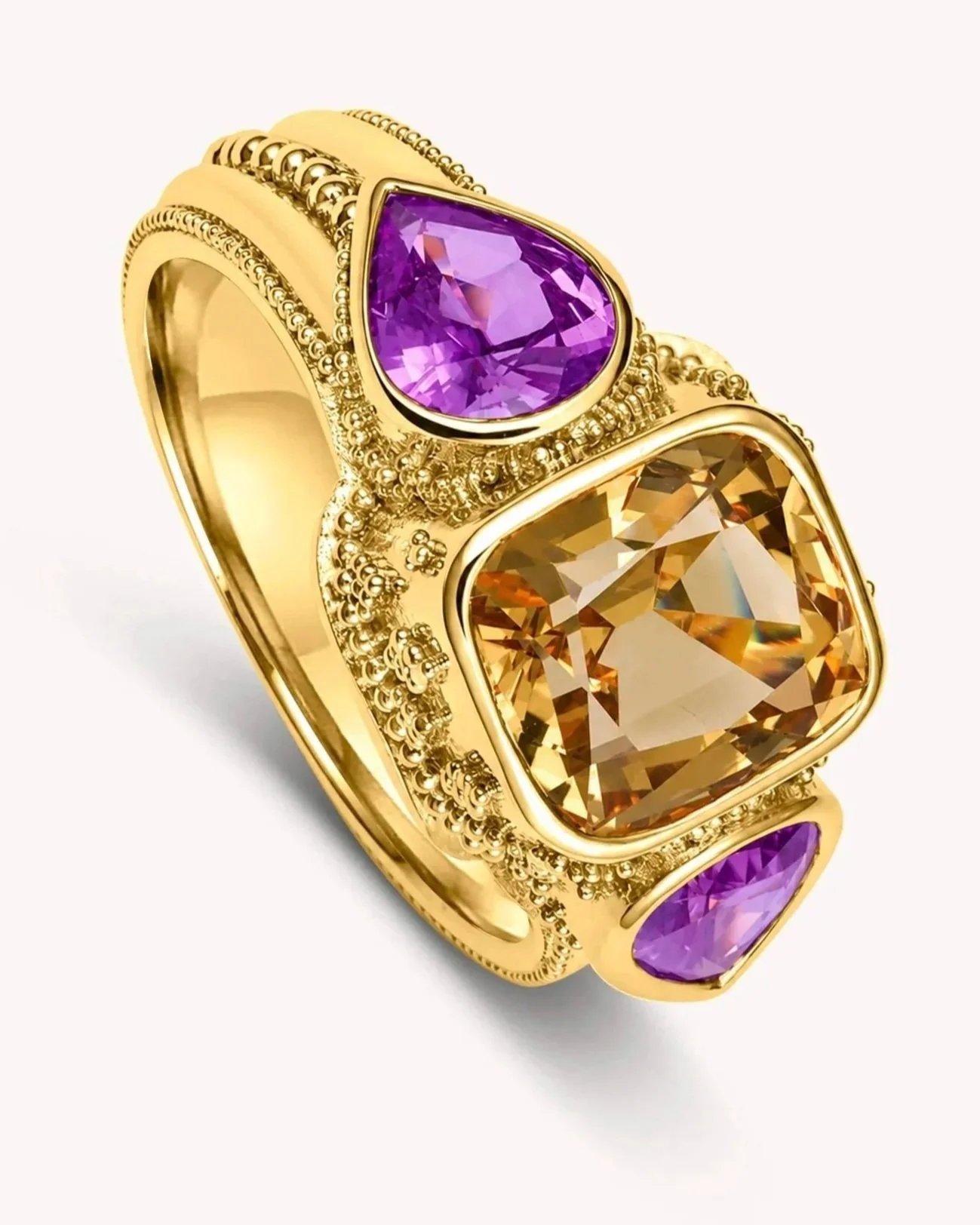
Granulation across the surface
On my more heavily worked rings, the granulation becomes part of the overall surface of the piece and can require hundreds of individual granules.
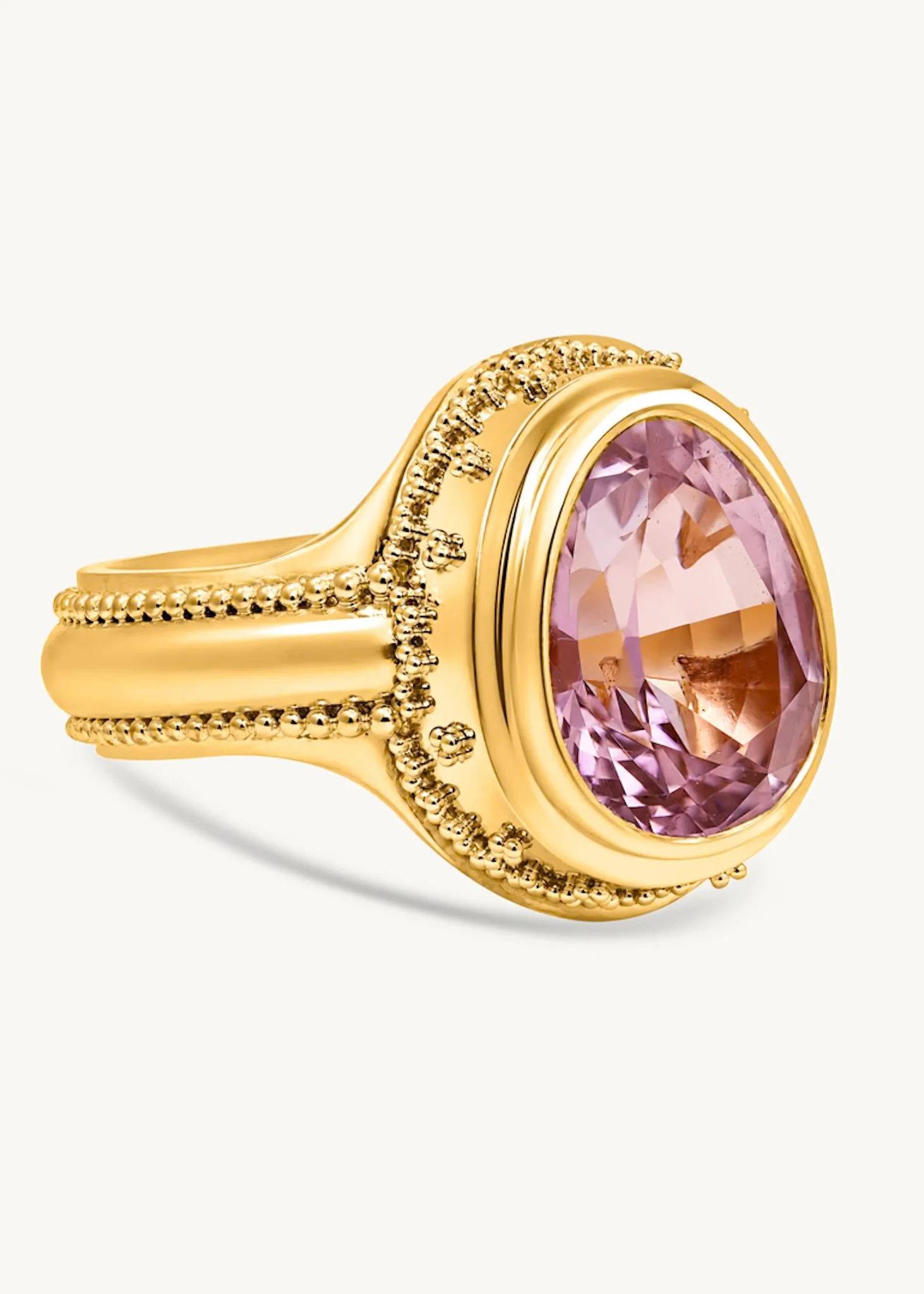
Granulation as a focal detail
Sometimes the granulation is used very sparingly, so a small detail carries more weight within an otherwise restrained design.
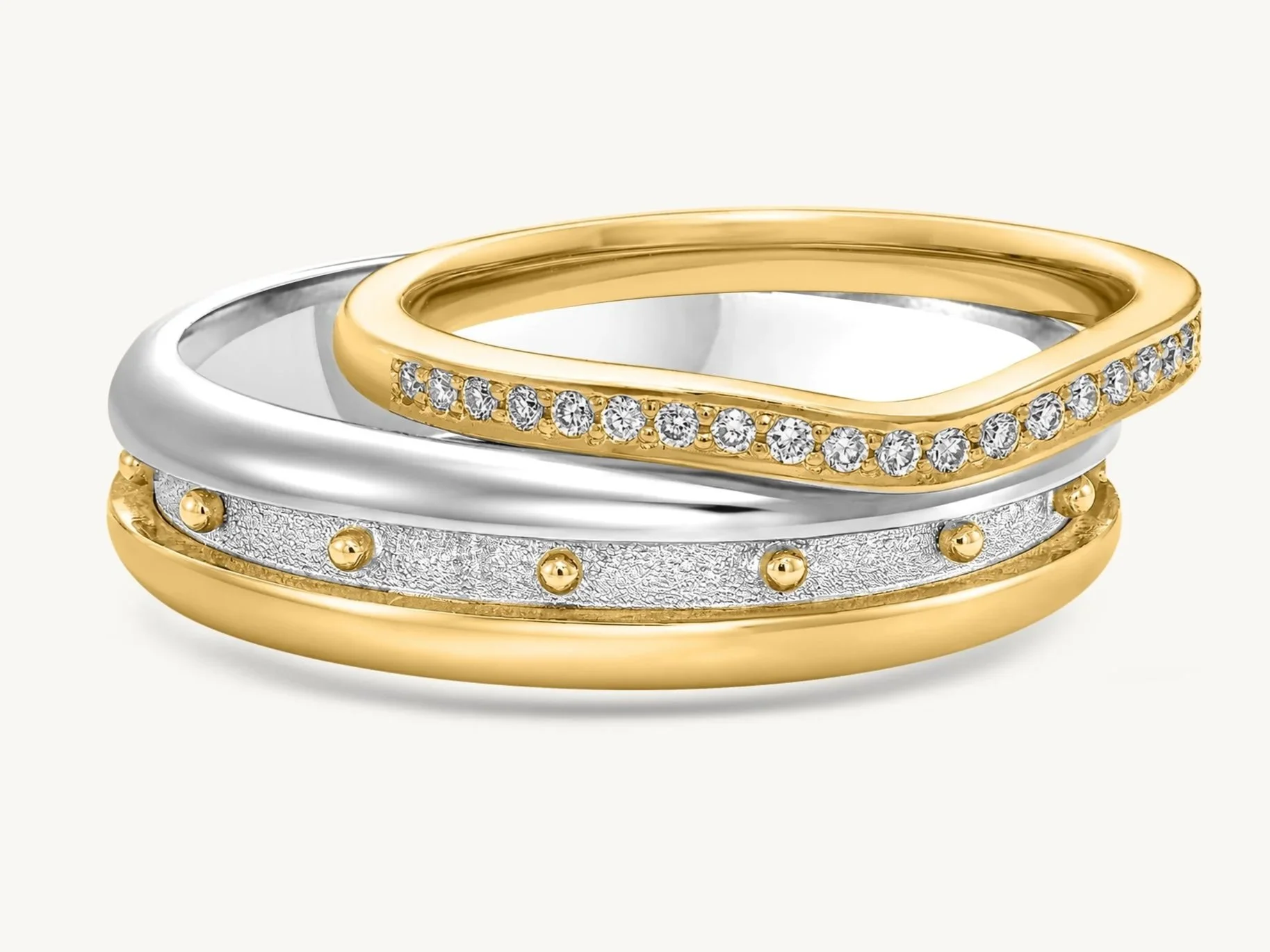
Granulation as an edge
A simple row of granules can define the edge of a band and create detail that only becomes obvious when the ring is viewed closely.
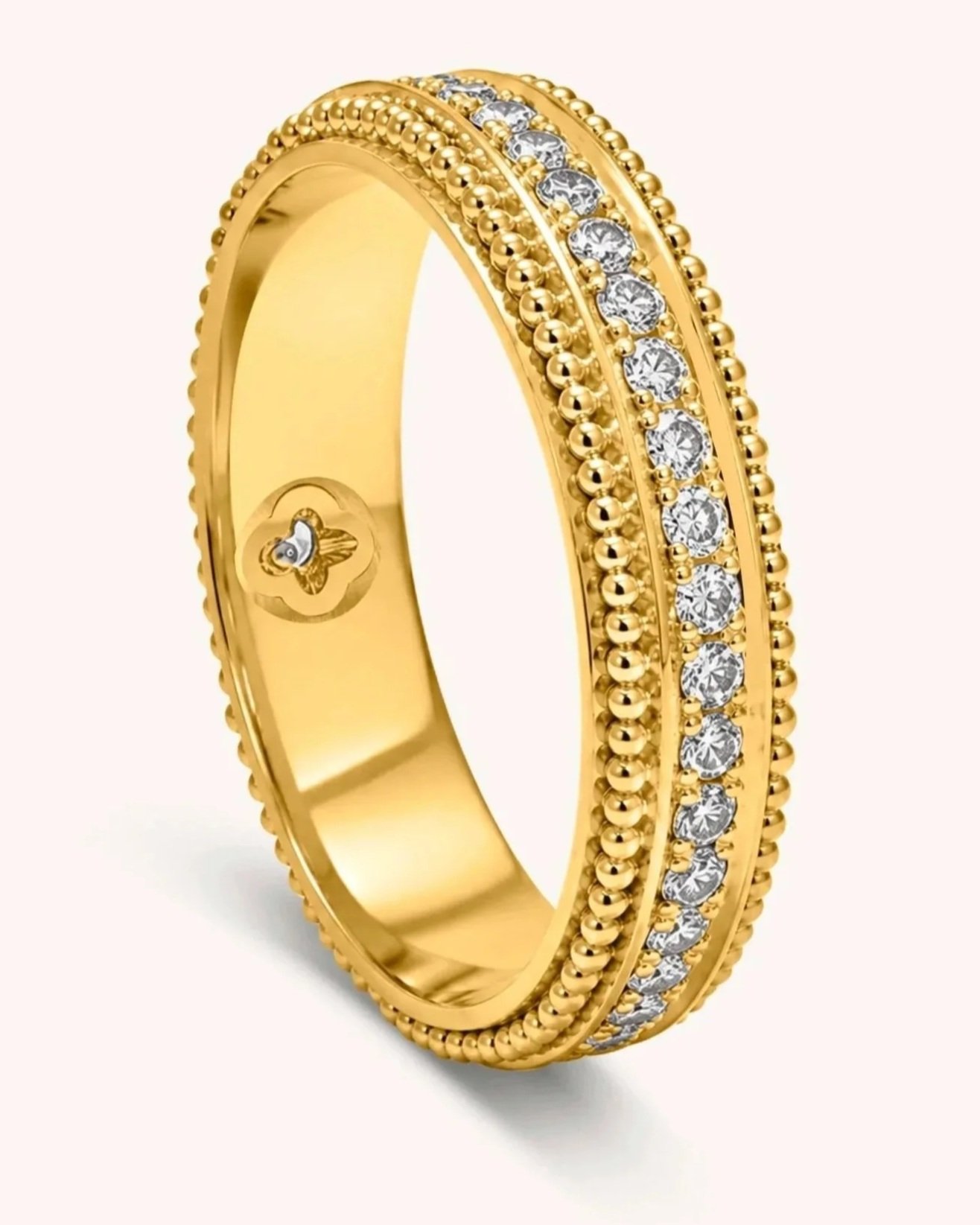
Granulation as part of the structure
In more architectural pieces, the granulation can work with changes in level, stepped surfaces, bezels, or shoulders rather than simply sitting on top of a flat band.
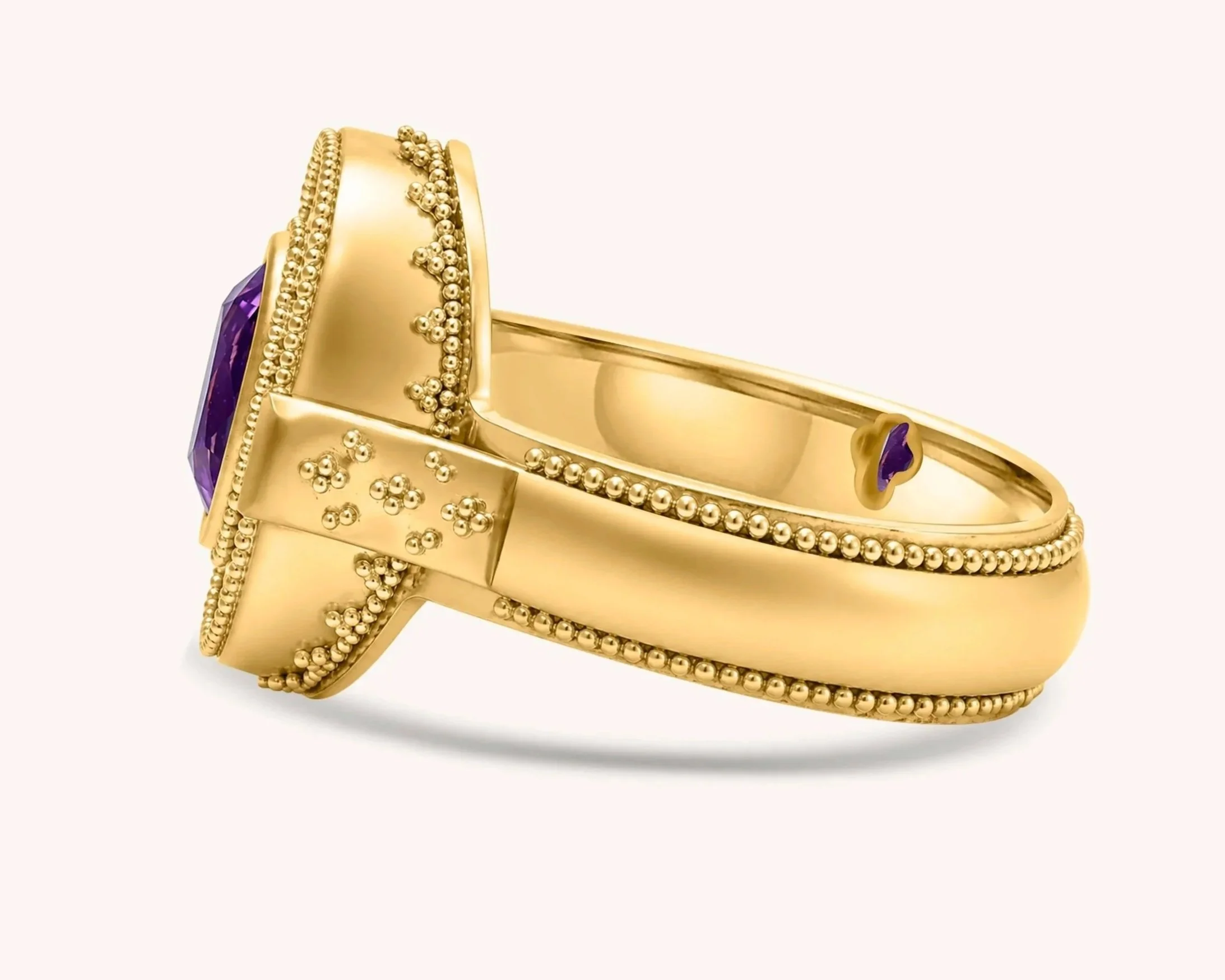
Whether I use one line of granules or cover much of the ring, the intention is the same: the detail should make sense as part of the design rather than feel added afterward.
I use granulation across engagement rings, wedding bands, and one-of-a-kind collector pieces.